View Content #19690
| Contentid | 19690 |
|---|---|
| Content Type | 5 |
| Title | Stephanie Knight Presents on Backwards Design in Nashville |
| Body | At CASLS, we believe that language education that is largely driven by the acquisition of vocabulary lists and distinct grammatical structures is limited in nature. Such an approach in the classroom often produces students who lack knowledge of linguistic variety and have underdeveloped pragmatic skills. Perhaps more importantly, this approach also fails to reach and motivate diverse populations of language learners because personal relevance and autonomy can be lacking or even ignored.
We are happy to report that the day was a success. According to Stephanie Ridley, AP Spanish teacher and coordinator of the event, “We, as world language teachers, had a very productive day because many of us got a new set of techniques to prepare us for the next school year with new interactive resources to help our students plug into learning language in a multifaceted way”. Indeed, whenever educators collaborate and reflect upon improving their craft and acquiring more tools to realize best practices, the quality of education for students is improved. If you are interested in learning more about LinguaFolio Online or other tools created by CASLS, please visit https://casls.uoregon.edu/pages/toolsearch/search.php .
|
| Source | CASLS Spotlight |
| Inputdate | 2015-07-02 17:43:08 |
| Lastmodifieddate | 2015-07-13 03:23:41 |
| Expdate | Not set |
| Publishdate | 2015-07-13 02:15:01 |
| Displaydate | 2015-07-13 00:00:00 |
| Active | 1 |
| Emailed | 1 |
| Isarchived | 0 |
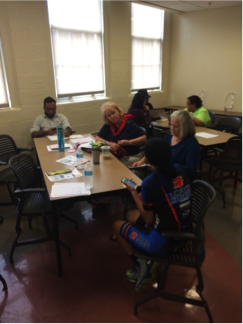 Keeping these principles in mind, Stephanie Knight, CASLS Language Technology Specialist, presented at a district-wide training for world language middle and high school teachers in Metro Nashville Public Schools. In the training, she focused on meaningful backwards design in which teachers bring context to learning by focusing on concepts that can connect world languages to other subject areas and areas of student interest. Other points of emphasis included using Costa’s